


What actually makes a country successful, much less liveable? Why is it that, up until 75 years ago, the wealthiest and most desirable places on Earth to live were historically majority-White countries?
Do pale skin or blue eyes make an economy grow? China and Japan have pummeled that thesis into the ground. Do natural resources (or the lack thereof) cause growth? The Democratic Republic of the Congo has trillions of dollars’ worth of mineral wealth and a rainforest that rivals the Amazon. Yet it has become synonymous with human misery. Norway, by contrast, piled its oil wealth into an Oil Fund and let it grow into one of Earth’s most powerful investors.
Could a country’s average IQ be the cause of success? Despite studies showing a robust correlation between national IQ and GDP per capita, researchers are still trying to disentangle cause and effect. If national IQ were truly the cause of wealth, Japan ought to be one of the richest countries on Earth. Instead, the nation that invented the Shinkansen and the practical lithium-ion battery is on track to be surpassed by Poland in PPP-adjusted GDP per capita. Poles are pretty smart, but are they Gundam smart? Japan’s stagnation shows that frightening brainpower and ungodly levels of creativity alone do not confer broad prosperity.
So what separates coastal California from central Chile? What’s keeping Valparaíso from being as wealthy and culturally influential as Los Angeles? These questions have been hotly debated by the world’s most elite minds. Two answers—one technical and one cultural—have more or less achieved consensus among the smart people who attend charcuterie-board parties.
The Importance of Institutions
According to researchers like Daron Acemoglu, what makes a country rich comes down to good institutions that enable intelligent people to weave the threads of resources such as coal and mathematical formulas into proverbial golden cloth. To economists, institutions aren’t just competent regulators and well-funded universities with great faculty lounges. They are clear rules enforced with a healthy mindset of fair play. That requires laws, norms, organizations, and umpires that help people own property, invest in businesses, compete with others, and trade with one another at home and abroad.
Since these rules are enforced more or less fairly, ambitious upstarts don’t lose sleep over a bureaucrat who purposefully harasses their employees to help a competitor. It is this level of trust and the assumption of trust that underpin a successful society and its economy. Without it, all you have left are underused fancy factories and white elephants.
I have a bone to pick with this consensus. First, what actually causes countries to build good institutions? Development economists have spent time and treasure developing answers to questions such as the legacies of different modes of colonialism, the evolution of colonial institutions, and the necessity of a robust civil society. Yet you’re still left thinking, “Well then, what really put Canada on one path and Zimbabwe on another?”
If good institutions are a consequence of culture, national IQ, or contingent historical events, then trying to export them becomes incredibly difficult. The IMF does not have a machine that can produce leaders twenty times more reformist. But let’s concede, for the sake of argument, that the World Bank, IMF, and WTO possessed a ray gun that effectively made a poor country’s leaders more ready, willing, and able to embrace whatever is considered best practice at a given time.
Would a normal person actually trust a bunch of Georgetown eggheads to make radical decisions about their country’s future? Why would a Zimbabwean maize farmer dependent on subsidies tolerate a drastically different system when it could potentially ruin him and his family? Unlike NVIDIA, you can’t really give the victims of creative destruction shares in economic convergence.
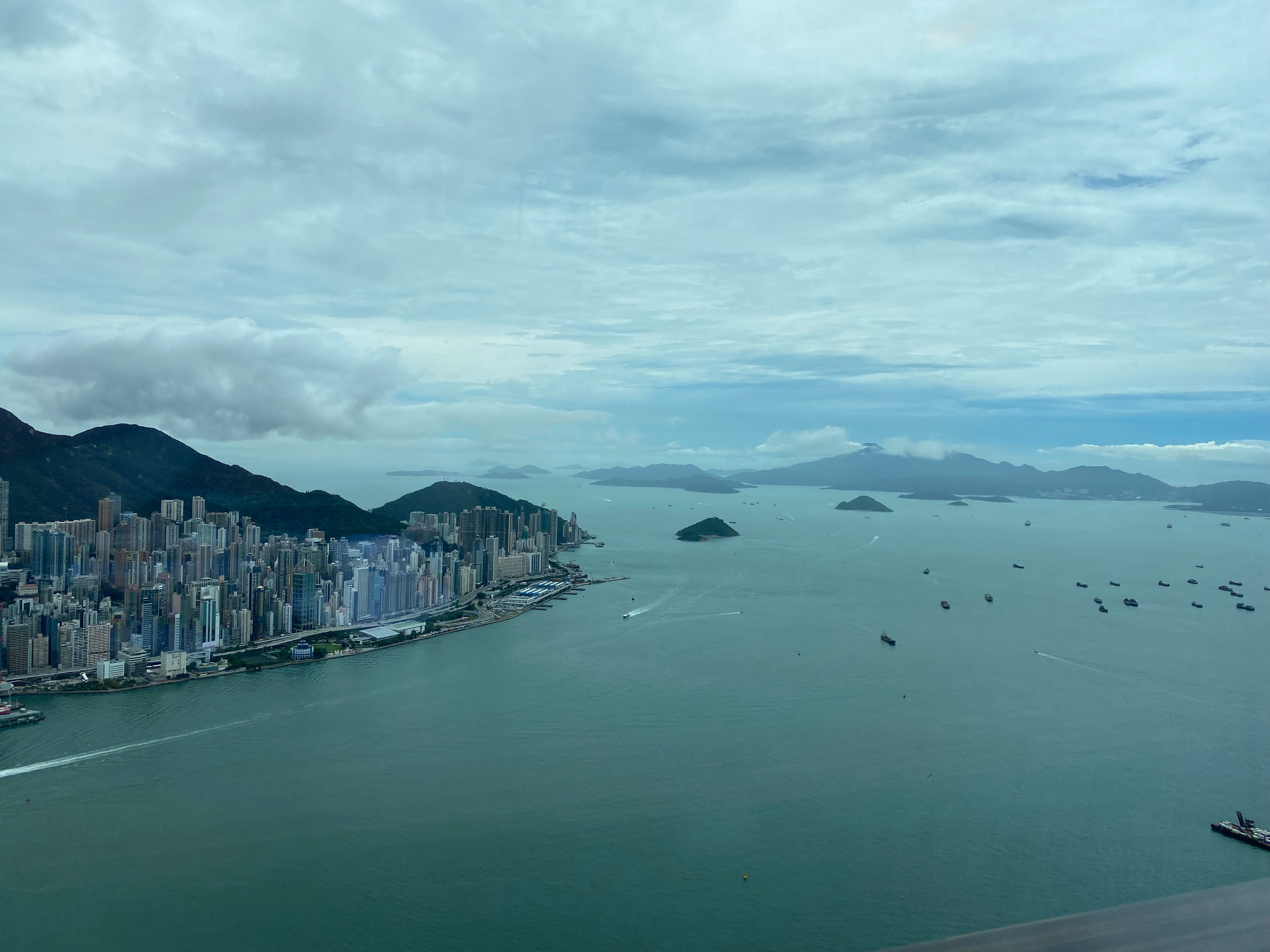
If it’s too difficult to build up a poor country’s institutions, why not let rich countries try to “export” their talent and culture? Why not give the British, the Irish, or even the Taiwanese a charter to take control of select parts of a poor country, build strong institutions and cultures over a period of 25 to 95 years, and then, as the selected territory converges with the rich world, transfer it back? The British stumbled into something like this with Hong Kong, and we all know how poorly that turned out in the end.
So if building institutions in poor countries is nigh impossible, and rich countries won’t build neo-colonies to help them catch up, you’re left with allowing as many people from poor countries to emigrate to the rich world as possible—and vice versa—and hoping for the best. As we all know, one result of this long experiment was Brexit and the rise of Donald Trump. I think we’ve tested this thesis to destruction.
It’s the Culture, Dumbass!
Some economists, such as Bryan Caplan, genuinely believe that much of the source of America’s great wealth lies in its “magic culture.” Others, such as Alex Nowrasteh, argue that America’s superpower is its ability to assimilate immigrants into a fun and easy-to-join culture. Unlike the sclerotic nation-states of Europe, America is a creedal experiment with a powerful and compelling set of values and principles. You don’t need to be white or Christian to be American. You just need to speak English, participate in your community, and believe in the civic religion. Just about anybody can be an American if they enjoy a mean apple pie, understand ninth-grade civics, and internalize her founding principles.
American culture attracts millions who grind hard, build businesses, upskill, and take more than a few smart risks to give their children a better life. While Europe struggles to turn Tunisians into Swedes, America’s fidelity to growth and change has often proved unusually adept at absorbing newcomers. The result is a continent-sized country that continually replenishes itself with the world’s ambitious, many of whom come precisely because they are attracted to American hustle, the Constitution, and the Second Amendment.
At first glance, this is a terrific thesis. We all know a former Englishman or Nigerian who ended up developing a Coke Zero addiction, a love of Filet-O-Fish meals, and a certain get-up-and-go that can only be found in the parking lots of a suburban mall. Still, there are two problems with this fantastically affirming argument.
First, many Western countries (including ones once associated with ugly ethnonationalism) also believe they possess a magic culture. France modernized concepts such as compulsory secular education, public opinion, secularism, and the belief that nationhood had to be constantly refined through vigorous internal debate. Ernest Renan argued that multiracialism had made France stronger at least 115 years before eighth-grade civics teachers started chanting “America is an idea” to ward off white-nationalist sentiment forming in the heads of their kids. If all-consuming civic nationalism truly made America rich, why didn’t it make France as rich? Ol’ Ernie wrote the seminal essay “What Is a Nation?” Where is their Apple?
Second, suppose Nowrasteh and Caplan are really correct—that America’s wealth (and, by extension, the West’s) was created by a magical culture of glorious liberty documents and Jeffersonian principles. In that case, we’ve just accidentally stumbled onto the most satisfying way to enrich poor nations. Instead of encouraging billions more people to emigrate to America and the West, we can bring Western culture to the world. Fire the condescending consultants and give Culver’s $40 billion in subsidies to open new stores in Accra and Addis Ababa. Blast the airwaves with Taylor Swift’s old songs and subsidize reruns of season one of Mighty Morphin Power Rangers.
Instead of another multilateral agreement for the establishment of this and the reduction of that, Esther Duflo should be given the power to force African and Middle Eastern elites to watch every single Ken Burns documentary known to man. After that, we’ll persuade them to take improv workshops and talk to Columbia-trained psychotherapists about their feelings. To top it all off, we’ll force the Grand Ole Opry, the British National Theatre, and the Art Institute of Chicago to open well-funded outposts all over the world so that everyone can finally know and understand why our magic culture is better than theirs. Who needs open borders when the true solution is universal basic Netflix subscriptions?
As you can tell from the lack of Tanya Tucker impersonator schools in Rwanda, these policies probably won’t work. So we’re back to square one.
If the Third World can’t import the First World’s institutions, and if the latter won’t govern the former, then mass migration remains. But mass migration has produced a decade’s worth of mass backlash. How will billions of people finally attain the living standards all of us want?
Conclusion
This essay was purposefully silly for a reason. If the underdeveloped world remains impoverished and poorly governed, there will be only one direction those people will go: north and west. Until your average Filipino line cook or Bengali code monkey has a reason to build a life at home, he or she will do anything short of murder to move. It’s just plain economics.
Most immigrants don’t come to the West (especially America) because of values, principles, and ideologies that inherently gentle a person’s condition. They covet the West because it is wealthy and liveable. With worsening climate change and continually stagnant productivity growth, immigration is only going to become an ever more controversial and heated topic.
If you, dear reader, want the West to stay white, you’d better start figuring out how to make the rest of the world a far nicer place to live.
I live on FIlipino shores and sometimes I look around me and think: "What if this place were run by Americans?" It's obvious, but it's hate speech these days, that it would quickly turn into a Hong Kong of the Sulu Sea. The answer you seek cannot be reduced to one simple insight, because humanity is a complicated tapestry. So while it's true that Japan is an explosion of wealth and creativity, as colonizers they were destructive barbarians, not builders, but sort of like ISIS with battle ships and samurai swords. Modern Chinese colonialism is an elaborate scam consisting of butt-wipe contracts and tofu-dreg projects that fall apart even while they're under construction. The only way to enrich the whole world so people stay where they were born, if that's a commendable goal, would be to actively encourage European re-colonization of parts of the world which lack competence to rule themselves. Your underlying assumption is that everybody deserves to be rich, safe, and modernized, when what they deserve is the sort of home they have created for themselves.
If we could defeminize our political thinking and consider seriously the biologically-grounded ideas expounded by the likes of people like Francis Galton, Arthur Keith and Raymond B. Cattell, we could figure out how to intervene in the population explosion in these doomed and damned societies, and implement humane measures, such as chemically-induced sterilization, to greatly reduce their populations.