


Editor’s Note: A Disclaimer
Everything you’re about to read is speculative fiction.
Dispatches from the other world imagines a parallel timeline in which productivity growth never stalled after the early 1970s. In that world, thousands of nuclear reactors provide cheap electricity, humanoid robots handle most drudgery, and supersonic flight is routine and affordable. Anti-aging therapies restore youthful vigor, and global economic convergence occurs without mass migration or cultural erasure.
I’m not claiming this timeline was inevitable or even superior in every way. I want to share vivid, human stories from that other Earth. By glimpsing a world that treats abundance and glamour as everyday norms, we might better notice what we’ve quietly accepted in ours.
This week’s dispatch from the other world is a classic Christmas 2024 blog post by the one and only Sanjay Mehta. Dr. Mehta was the longtime Managing Director & Head of Global Strategic Investments at Bharat Automation Robotics Corporation (BARC) during its heyday in the 1980s and 1990s.
In the eighties and early nineties, most London-based executives of a certain generation pretended to love hunting, fishing, and shooting. Handsome and stoic right up until they remembered they weren’t actually American.
As one of the few Indians who still had to be physically present in Europe (those perfect humanoid robots don’t sell themselves), I was invited to more than a few of these cowboy pageants in Wyoming and Montana. Frankly, there were too many ten-gallon hats for my taste.
One night, while wrestling with an egregiously overseasoned filet mignon, an overpromoted young executive from what was then a highly esteemed hardware conglomerate asked, “Sanjay, what’s your favourite aspect of travelling?” I finally confessed: my wife and I loved fine hotels as much as anyone, but nothing made the heart soar like dozing on a Concorde that could take you from anywhere to everywhere.
Some people, like my wife Devi, budget their time like a strict grammar-school headmistress. She can sleep straight through an overnight flight and wake refreshed for meetings and low-carb brunches at the Leela Palace. I still can’t sleep on planes.
The Indian advanced-robotics industry demanded men of action. Sealing deals and outwitting rivals meant arriving fast and fed. When you’re selling humanoid robots to private hospitals in Santiago or robo-kitchens to Rwandan fast-food chains, you need to be 110% sharp like John Steed in his prime. That means supersonic. Full stop.
Today, every premium airline is in the SST game, and American Airlines is no exception. So when Devi was offered a sweetheart round-trip fare of exactly $5,450 per person, I leapt at the chance to fly with her to California to see our youngest son. A standard ticket runs closer to $9,000; it was the perfect opportunity to try a new carrier.
The Ground Experience Ain’t What It Used to Be
Back in the mid-eighties, a supersonic ticket came with inclusions that made hardened executives weep with joy. You didn’t just zip across the Atlantic at Mach 2.5 while enjoying an excellent plate of foie gras; you were cosseted from the moment you left home.
Passengers read their newspapers in Nordic-minimalist lounges, in perfect silence. You were personally escorted to the gate by an Italian model or a pert receptionist. There was even a discreet smoking annex. The boys and I called it “Room Vert”, the only civilized place left in Britain to enjoy a fine hand-rolled spliff.
Nothing, however, compared to the complimentary Concorde limo service. BA or Pan Am would collect you from anywhere, drive you to the Frank Whittle Terminal in perfect comfort, or return you to your home or office. Perrier-Jouët flowed freely; you arrived at work feeling like a winner.
These days, a $9,000 ticket doesn’t stretch as far. Ever since our allegedly Conservative mayor slapped a surcharge on private cars, the airlines have used it as cover to scrap the limos. Unless you live in the privately governed Square Mile or semi-independent Canary Wharf, you’re shunted onto the Tube unless you fancy tipping cabbies or paying exorbitant parking fees.
Since Mrs. Mehta and I live in Marylebone, we took the Elizabeth Line to Whittle Terminal Station. We passed the time nibbling Italian biltong while Devi kept watch over my trusty Dunhill suitcase. She claims she takes public transit for the environment. I suspect it’s because she loves showing off her rejuvenated figure in “borrowed” clothes.
We arrived before evening rush hour. Security remains mercifully swift, but the old courtesies have faded. In 1987, senior staff would whisk my colleagues and me through to the lounge; a certain Frenchman would pour whatever wine we desired, and Joanne, a lovely Aucklander, would fetch anything vital from Duty Free. Today, you have to ask nicely.
Finding the Admiral’s Lounge felt like an eternity, and the reality was underwhelming. The Eames chairs were comfortable, but the cloying citrus perfume made relaxation impossible. Our Ohioan server had a million-dollar smile and boundless enthusiasm, yet she spoke like one of the robots I used to sell, as though individuality had been optimized out of her.
One thing Americans still do right is meat. Devi and I shared a 12-oz Ahimsa-certified, lab-grown ribeye from Argentina. I found it slightly off; she demolished it. “God bless those gaucho lab techs,” she said.
It’s the Sixties All Over Again
Staring at the red lightning bolt and grey livery still stirred the same wonder I felt as a twelve-year-old Bombay wingnut. The mismatch between the almost modular Concorde Model D and its Jet-Age paint job felt gloriously futuristic.
A silver-fox purser led us to our row. The clever use of space and the limited number of seats made the cabin feel surprisingly spacious. The seat itself was like a Four Seasons bed transformed into a recliner. That alone would have sufficed, but the VR headset made this flight memorable. Unlike the one my son bought me, it was comfortable and easy on the eyes. The remastered films and games were genuinely immersive.
Have you ever wanted to witness the Battle of the Bulge or Calcutta at the height of the Raj? I did, for three solid hours.
Part of the original Concorde thrill was drinking Château Lafite in horrendously cramped quarters. It was oddly erotic; one felt manlier for enduring a speeding bullet. But by the time our son was five, the airlines—facing lie-flat business-class competition—began stripping away the glamour: bottomless champagne curtailed, classic French dishes replaced, supersonic travel made to feel routine. It was a colossal mistake that they have never fully reversed.
So when a six-foot stewardess served perfectly chilled beer alongside a heaping bowl of delectable shrimp and grits, it truly felt like 1974 again, my first real Western American road trip. For a fleeting moment, I could have sworn the strawberry-blonde three seats ahead was an old flame. Older women in much younger bodies can sense each other from miles away, but Devi was napping, so the mystery remains.
Final Rating: 8.5/10
The beer is cold, the food excellent, the crew professional, and the stewards and stewardesses are open to feedback.
In today’s relentlessly optimizing world, American Airlines’ Astro-Jet service feels like a much-needed throwback.
You won’t feel guilty demanding and receiving actual human contact.
If you expect to feel the sublime awe of Concorde circa 1989, you’ll be disappointed.
Leggy stewardesses and fancy VR aside, you’re still on a plane and not in a cramped capsule full of fellow movers and shakers changing the world.
If bottomless champagne and a wide selection of cigarettes are non-negotiable, stick to Germania Airlines, Polonia Airways, or Iran Air.
Like India’s once-unassailable dominance in advanced robotics and deep automation, Concorde’s golden age is in the past. About Me
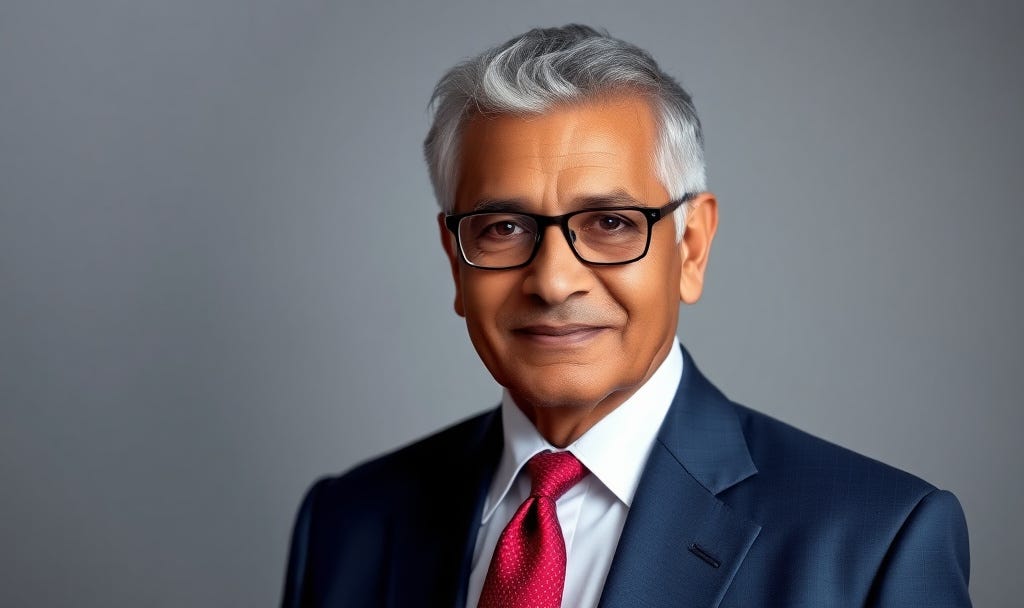
Before I took early retirement to spend more time with my profoundly autistic son, I was one of 50 men who turned Bharat Automation Robotics Corporation (BARC) into a multi-billion dollar juggernaut. From 1981 to 2002, my team and I sold the world’s most incredible robots to the most meticulous and demanding customers. Many educated citizens believe the Indian robotics industry, BARC in particular, perpetuated negative stereotypes and legitimized racist immigration policies. I like to think BARC played an outsized role in building an India that kept our talent at home while enabling them to compete globally. If nothing else, I take pride in helping India become developed.
This essay is very interesting and little sad. It tell story from other world where everything better – supersonic planes cheap, robots do work, people young forever, but old man Sanjay miss real glamour from 1980s Concorde, with limo and champagne and smoking room. Now even rich flight feel normal, not special, and he complain about lounge smell bad and server talk like robot. I like how author mix funny details like lab meat from Argentina and VR for old battles, with real feeling of loss – like when something good become too usual and not exciting anymore. The end make think about our world, maybe we also lose some magic in progress. Good read, make me smile and think.
Shrill inbred little shit man